
A trip to the Soviet strongman’s home town in Georgia reveals a different perspective to the one we are used to.
Just as it is often forgotten that Hitler was Austrian rather than German, many are unaware that Stalin was not Russian, but Georgian. While there are many exciting things to do and see in the country (trekking and sampling Georgian wine stand out as particular specialities), for anyone with any kind of interest in 20th Century history, a visit to the country is not complete without seeing Uncle Joe’s hometown of Gori.
It is important to mention that Georgia has undergone a wave of modernisation over the past two decades and well and truly moved on from the days of Stalin. Without knowing in advance, you wouldn’t realise the country and the man were even connected. And if you talk to younger people in Georgia you will generally hear the same perspective of a brutal dictator as that taught in Western classrooms.
That is not to say that there is not a reluctant pride in the story of a man who rose from humble surroundings to create and lead a global superpower.
Arriving from Tbilisi outside Stalin’s house I mentioned to the taxi driver how the building might have been exaggerated a little given that Joseph Stalin was born into a poor family. He replied that Stalin also died a poor man and was never an oligarch who enriched himself at the expense of the people.

This surprised me. Could it really be that the man who practically invented the cult of personality was someone who personally lived a modest lifestyle very much in line with communist ideals? Opinions on this are divided but there is little suggestion among historians that Stalin ever displayed the overt opulence of the likes of Saddam Hussein or Ceausescu.
The main complaint most Georgians have about Stalin, far above the number of people killed under his rule, is how little he did for Georgia. It’s a source of great disappointment in the country that a local who became the most powerful man in the world played a key role in destroying the country’s independence and appeared to focus most of his attention on the wellbeing of Russia rather than his homeland.
At the museum itself, it is well worth paying the 15 lari (£4) for the guided tour. While speaking a little fast, the young guide is extremely knowledgeable and her fervour for Stalin is almost infectious. She is more than happy to answer any questions, and answer them well, but the tour is presented in such a way as to make you feel like a dumb and arrogant Western tourist were you to bring up some of the more unsavoury aspects of Stalin’s rule.
A particular highlight is a photo of Stalin’s son Yakov. Captured by the Nazis during the war, Hitler offered the chance to exchange him for German general Von Paulus, but Stalin refused. While this gesture is seen in the West as a show of Stalin’s lack of humanity, the guide stated that he was sending out a clear message to all the fathers of the USSR who had lost children fighting fascism that they were not alone. Whether the gesture was heartfelt or pragmatic, it is hard to argue with the logic.
In contrast to most of the country, the guide was also keen to emphasise Stalin’s Georgian patriotism, explaining how he liked to sign his name in both Georgian and Russian.
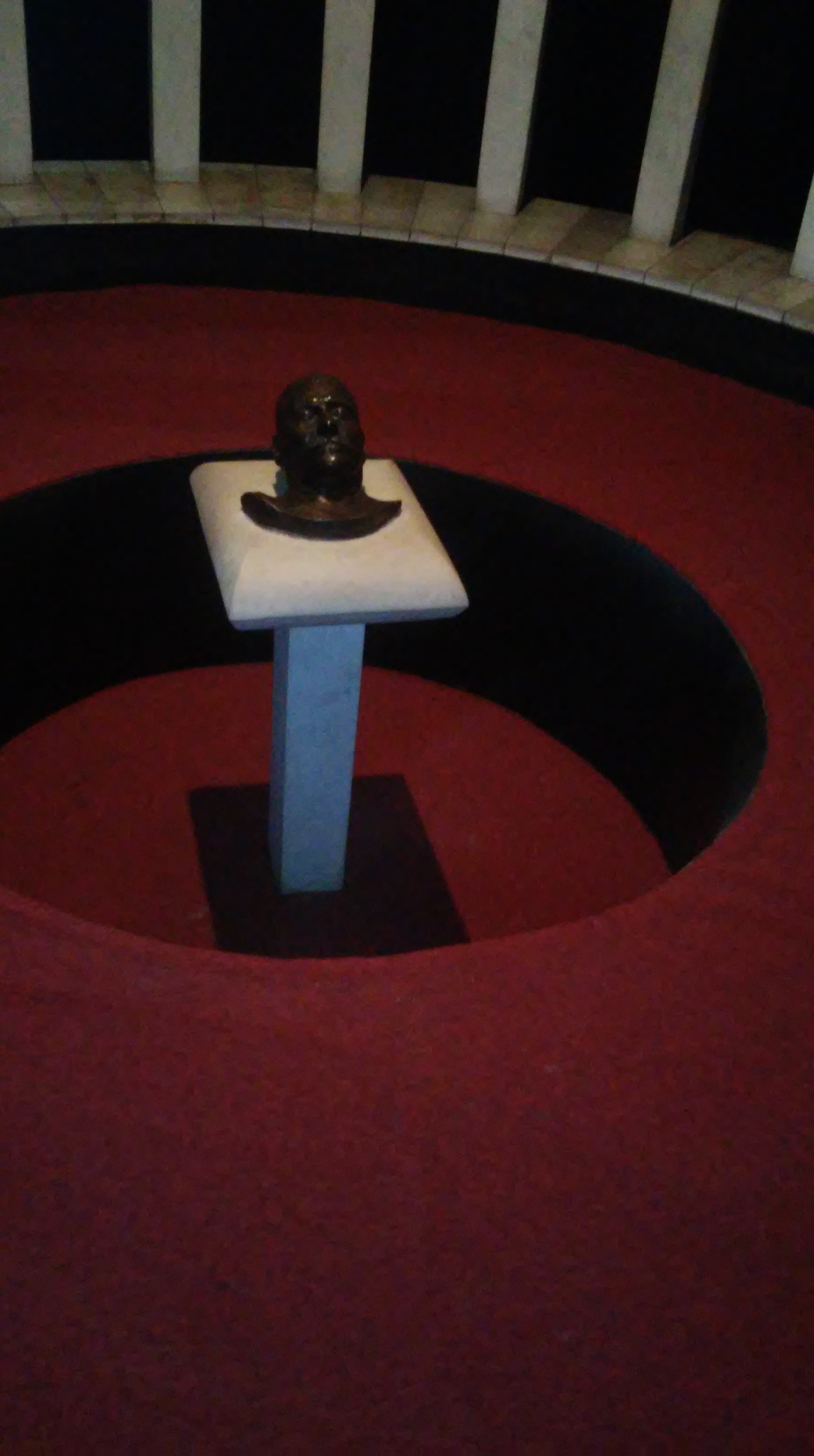
The tour ends in a small room modelled on a Stalinist prison cell. While many would expect a room commemorating the victims of Stalin’s policies to be more prominent, it was only in fact added after the war with Russia in 2008, when Gori was temporarily occupied by Russian troops and the government wanted as little as possible to do with the legacy of the Soviet Union. Also removed two years later was a giant statue of Stalin in the centre of Gori, but despite the previous Russian occupation, this decision was so unpopular among residents that the statue had to be removed under cover of darkness.
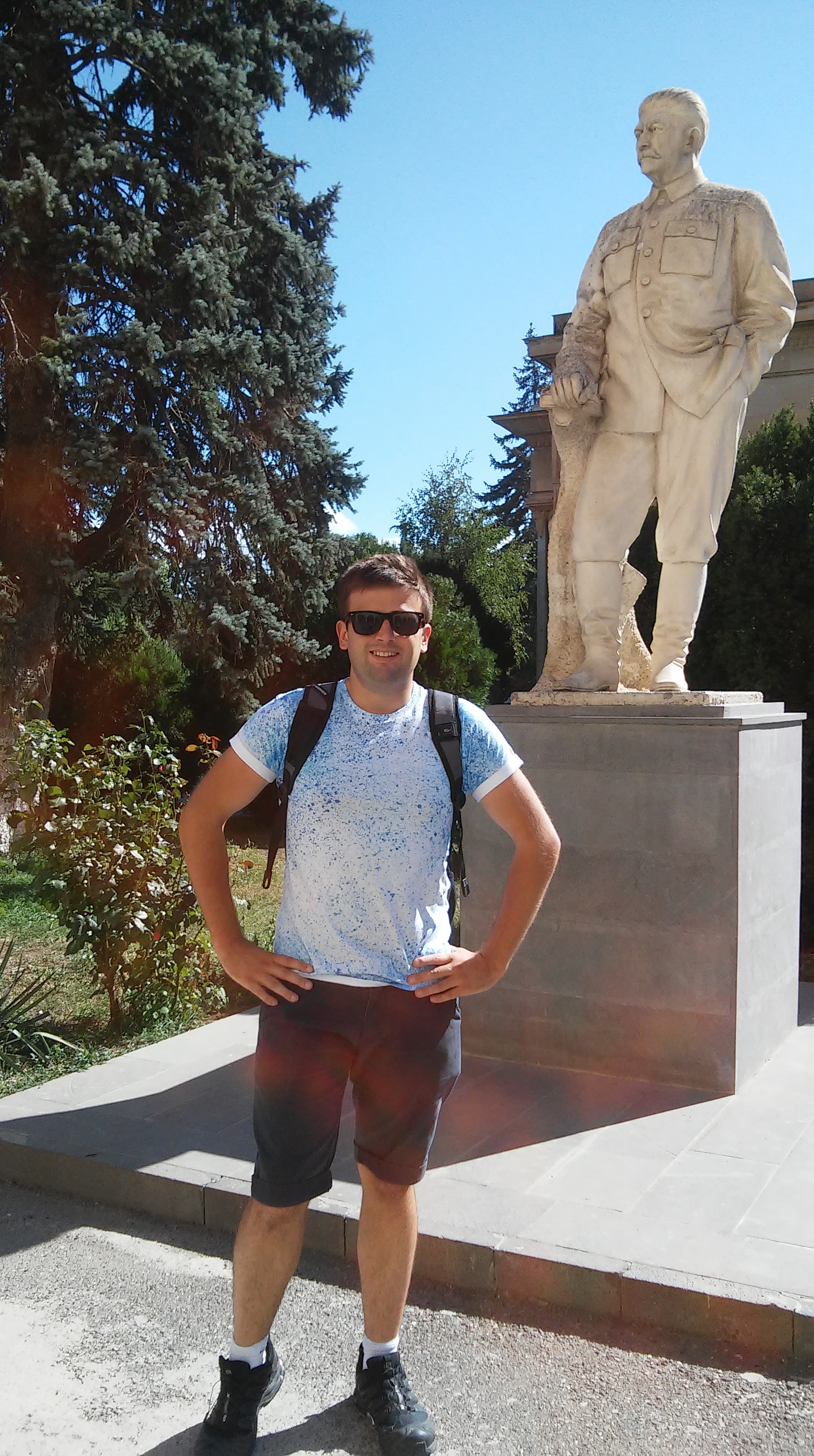
The fact that almost 10,000 people out of a population of 55,000 signed a petition for the statue to be reinstated shows that at a very minimum, the people of Gori want tourists to continue visiting the town and museum in order to see the Stalin cult in full flow.
 Sam Street Writes