The EU referendum will save the party in the short-term, but destroy it in the long-term.
Bookies were dumbfounded. The result represented a seismic shift in politics. The political class had been given a bloody nose by people who felt Westminster no longer understood their concerns. They feared they would get poorer, and that their communities would change beyond all recognition. All they wanted was for politicians to start listening to them.
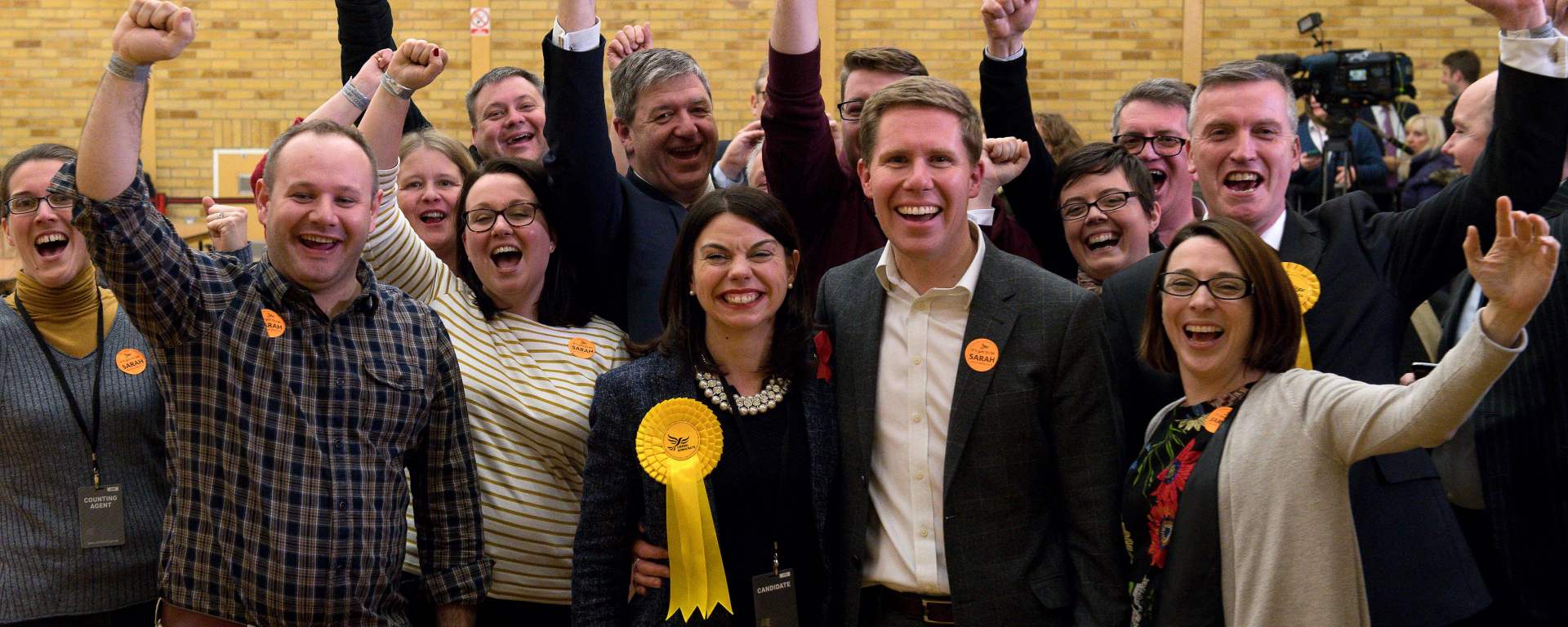
I am not talking about Leave voters, but rather those who propelled Lib Dem candidate Sarah Olney to victory over Zac Goldsmith in Richmond Park.
The reason it is so easy now to describe voters in an affluent London suburb in the same patronising way as working class voters across the country have been described for years is because Brexit has turned the Lib Dems into what UKIP used to be, a party with nothing to lose.
Electoral oblivion and the referendum result has finally freed them from the shackles of trying to be all things to all people.
They now have their answer to the great question: ‘What are the Lib Dems for?’
And that answer is to be a single issue protest party for affluent metropolitan Remain voters.
Never again will they even pretend that they aspire to run the country, and if they ever become electoral kingmakers in a hung parliament, will they dare enter government again after they were punished so brutally in 2015 for joining the coalition?
When you are down to eight seats and, as a result, starved of media coverage, you will take extra votes and seats however they come. And there is no doubt that the Lib Dems have a massive opportunity to put pressure on the Conservatives and Labour in and around London.
But as a result there will be seats they’ll have to abandon for the next two or three decades. The party’s own research suggests 26 of the 57 constituencies held by the Lib Dems in 2010 voted Leave and, even putting that aside, there are large numbers of Remain voters who have no desire to re-run the referendum, as is party policy.
By campaigning on this one single issue, they have a very good chance of winning back the likes of Vince Cable’s former Twickenham constituency, Southwark and Bermondsey, where Simon Hughes served for 22 years, and Cambridge.
However the trade-off is that they will be almost completely giving up on areas such as Cornwall and the West Country which used to be their power base. Even if they win back the tactical Labour voters who abandoned them because of their role in the coalition, they will see huge numbers of hardened Leave voters, who have never voted Conservative before, switch their allegiance to Theresa May’s Tories in order to keep them out.
In the 28 years the party has existed under its current name, there has been a perception across the country, even from voters who disagreed with them, that those representing the Lib Dems are dedicated public servants who have entered politics for the right reasons. Because of this, they tend to do very well at the local level.
But what will happen now to those Lib Dems in Leave areas who have worked so hard to get people to trust them? Norman Lamb, the party’s health spokesman and runner-up in the leadership election, was returned to power with a majority of over 4,000 while his colleagues fell around him. This is because constituents recognised him as a hard-working MP who took all their views into account.
In the EU referendum however, the people of North Norfolk overwhelmingly voted Leave. Lamb must be quaking in his boots at the thought of going into the next election promoting a policy that so strongly misrepresents his constituents.
The boost the party gets from London and the suburbs will only be a short-term one and they will be left with nowhere to rally themselves when the EU referendum ceases to be an issue. At a time when Barack Obama chastised America’s beaten Democrats for failing to ‘turn up everywhere’, the Lib Dems have decided their best strategy is to only turn up on the doorsteps of voters who say what they want to hear. It is a strategy they will pay the price for.
If Tim Farron’s task is to be the struggling party’s master surgeon, the EU referendum has allowed him to stop the bleeding, but it is far from certain that he will be able to save the patient’s life.
 Sam Street Writes