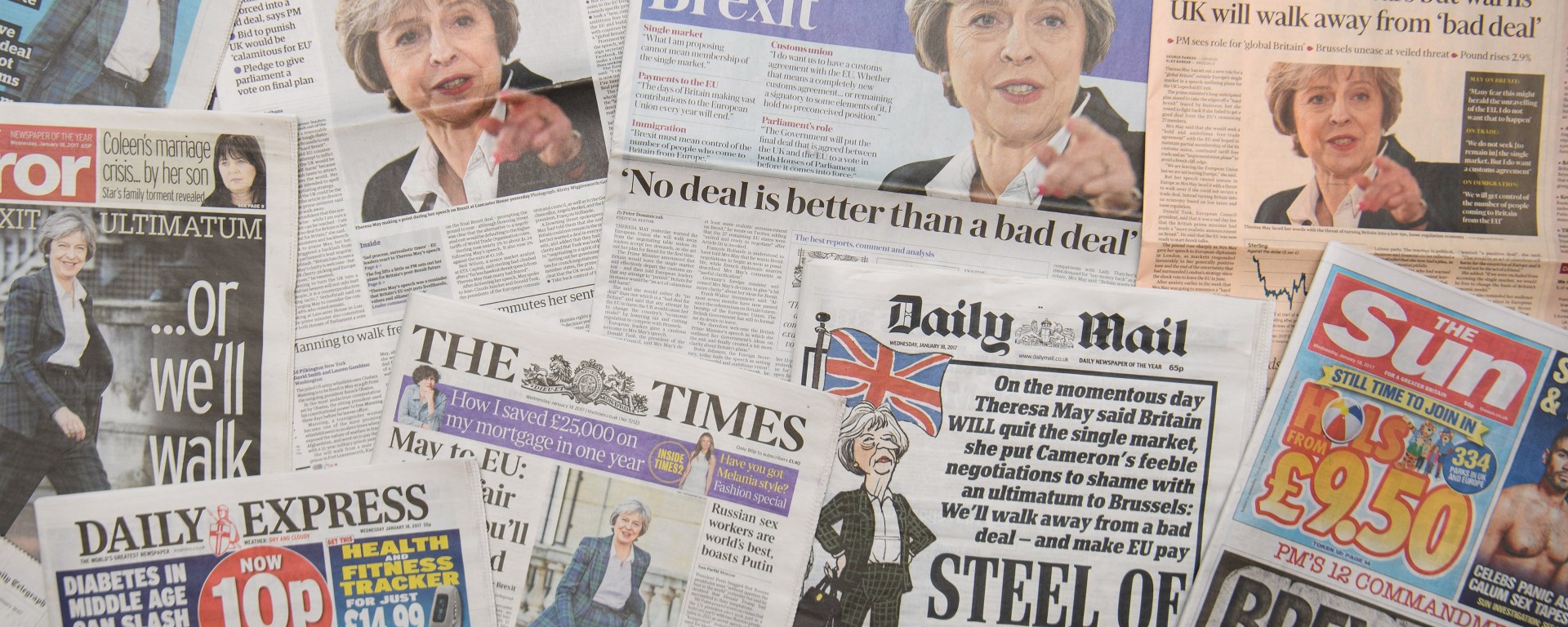
An excellent and succinct speech should have the British public feeling much more confident about Brexit.
I wasn’t the only one who got our Prime Minister very wrong.
After months without a word, the woman who The Economist described as ‘Theresa Maybe’ came out with something absolutely unexpected. Her speech yesterday gave as detailed an explanation of Britain’s Brexit negotiating position as you are ever likely to hear from any politician on any subject.
Gone were the gimmicks of Cameron and Osborne, and the irritating buzzwords like ‘robust’ and ‘vibrant’ which mean nothing in the context politicians use them.
For once the Prime Minister spoke to the people in plain English. It has to be a wonderful thing that any British person who listened to the speech would now be able to explain, simplistically, to a European, what Brexit deal the country is looking to achieve, rather than embarrassingly shrugging his or her shoulders.
Will Britain remain a member of the single market?
No, we want a new trade deal which provides us with access.
Will Britain remain part of the Customs Union?
We want either associate membership without being part of the Common Commercial Policy or the Common External Tariff, or alternatively, a new agreement.
Will EU citizens be allowed to stay in Britain?
As soon as the same rights are guaranteed for British citizens in the EU.
Frankly it’s encouraging that we have a Prime Minister who expects us to know what the Common Commercial Policy or Common External Tariff are, or at least have the intelligence to look it up if we want to know. Many will remember that our last leader pretended he didn’t even know what the Magna Carta was, lest the plebs think he was too educated for them.
And there was a warning at the end of the speech which everyone in Britain and everyone in Europe will understand. ‘No deal is better than a bad deal’.
EU leaders will take the Prime Minister at face value on this for one massive reason. They gave David Cameron a bad deal and the fact he didn’t say ‘no deal’ resulted in him losing the referendum and, ultimately, his job.
Last week I compared May’s approach to policy-making since taking power unfavourably to Donald Trump’s, because at least with the president-elect’s ‘government by Twitter’ approach, you could see what his priorities were and that change was happening, whereas most people had no idea what the government wanted from Brexit and wondered if May even understood how it could be achieved.
Whether you agree or not with the type of Brexit Britain will be pursuing, it is now starting to become clear that Theresa May can go a long way to addressing the issues that led to Britain voting to Leave the EU.
A stricter immigration policy is a given, but it seems the Prime Minister will also give us a government that makes an effort, that doesn’t accept second best and that treats the British people as adults. ie everything that David Cameron’s leadership failed to provide.
And a warning to the EU’s leaders. If you hand Britain a deal so bad that Theresa May is forced to reject it, it will be on your heads. Nobody will blame a Prime Minister who tried and failed, because it was the collective will of the British people that set her sights high in the first place.
She may have been on the losing side on the referendum, but May’s success is now the country’s success. If the EU believe they can just ensure she fails to achieve the goals she has set out, sit back and wait for Britain to realise the error of its ways and clamour for re-accession to the union, they will be waiting for a very long time.
 Sam Street Writes