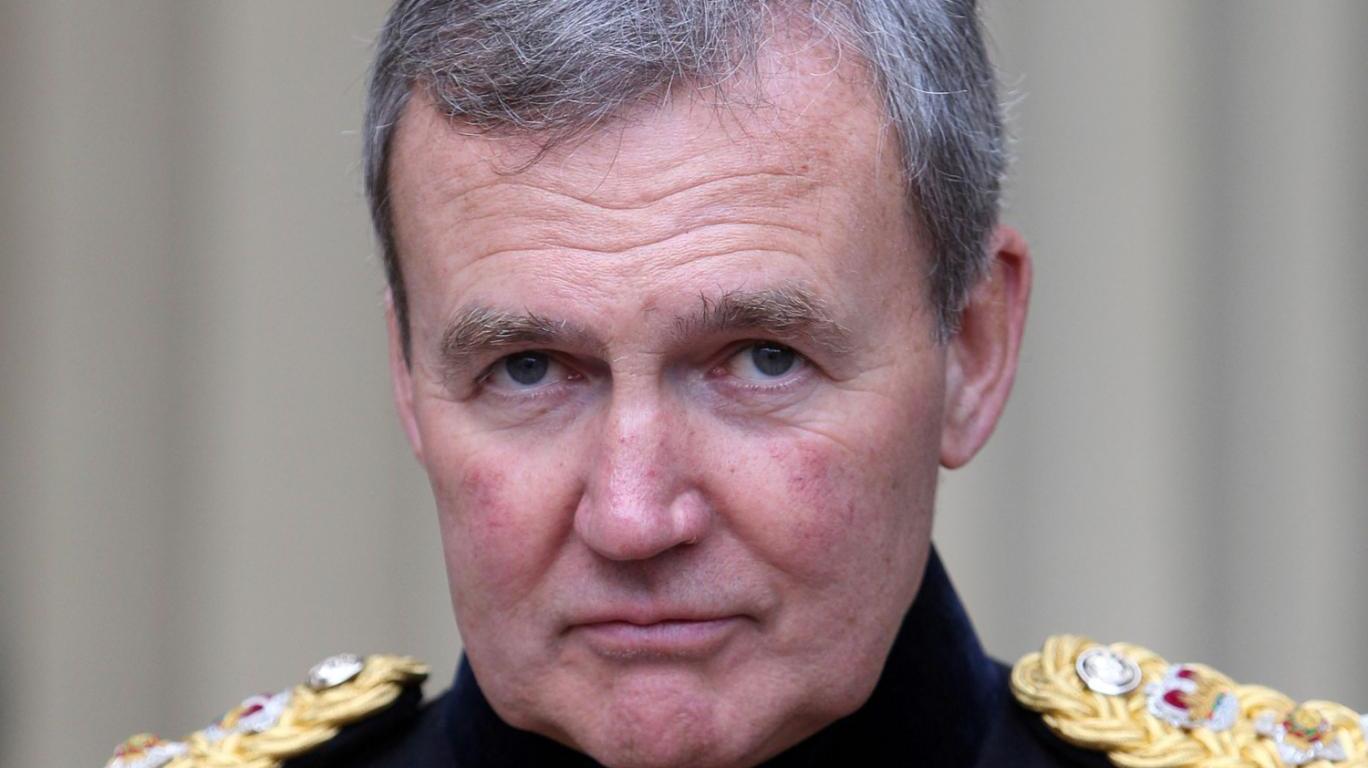
With his intervention on Syria and the nuclear deterrent, General Sir Nicholas Houghton is playing with fire.
In the space of a week, the Chief of the Defence Staff has said that Britain was letting down its allies by not joining the US-led bombing campaign against the Islamic State in Syria, and that he would be worried if someone who would never use nuclear weapons, referring to Jeremy Corbyn, was to get into power.
As a side point, if there were ever a situation grave enough that the use of nuclear weapons against a foreign country was even discussed, for example if foreign troops were to occupy British soil, you can be pretty sure that pacifists such as Corbyn would have long since been driven out of government (a la Neville Chamberlain) and replaced by a more assertive leadership. So Sir Nicholas doesn’t need to be too worried.
With both comments from the general, what is at stake is a bigger issue. That is the unwritten contract between the British people and the armed forces, that elected politicians decide whether to get militarily involved overseas with the armed forces remaining neutral and following the orders of the politicians. This contract is the reason that the public took such pride in the courage with which the armed forces did their duty in Iraq while at the same time wondering why they were sent there in the first place, and it isn’t one that any general should take for granted.
A look at the American response to defeat in Vietnam shows that even the most patriotic countries can fall out of love with their armed forces when serious mistakes are made. Going back to World War I, which is being commemorated today, the phrase ‘lions lead by donkeys’ has stood for a hundred years to refer to those generals who were so aloof and fanatic about war that they were willing to order hundreds of thousands of young men to walk into machine gun fire.
Of course these are extreme examples, but let’s imagine under extreme public pressure from generals of the armed forces, the UK did choose to intervene in Syria and it went catastrophically wrong. Where normally the public would vent its anger at politicians, in these circumstances fury could also be vented at the armed forces, which would be a disaster for recruitment, hinder the country’s future ability to involve the military overseas and all in all be a disaster for national security.
Similarly, on the nuclear deterrent generals are right to engage with politicians behind the scenes to explain what is needed for them to best carry out the job. But to come out publicly in favour of one position means that as soon as someone who believes the opposite is elected, the tabloids have a battle between the government and the armed forces, whether factually correct or not, to write about. This is bound to lead to mistrust between the military and politicians and again negatively affect national security.
In summary, things work best when the military remains out of politics and follows the orders of elected politicians, and in exchange those elected politicians act as shock absorbers if anything goes wrong on the battlefield. For anyone like Sir Nicholas Houghton to try to change this is opening up a huge can of worms.

